
Leaderboard
Popular Content
Showing content with the highest reputation on 03/29/2015 in Posts
-
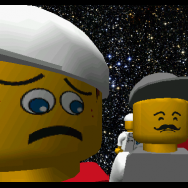
30 Screenshots #4: The 4th One
Cirevam and 2 others reacted to legoracer91 for a topic
A year later... 30 Screenshots #4: The 4th One maybe something to do with the brickster cause like 10 of them are about him Yaay. Check out my other ones! >30 Screenshots #1 >30 Screenshots #2: The Infomaniac's Revenge >30 Screenshots #3: Island Xtreme Randomness 30 Screenshots #5...?3 points -

30 Screenshots #4: The 4th One
legoracer91 and one other reacted to Cirevam for a topic
when u high on the job but ur sis don't know2 points -

RRU Quotes 2: Reckoning
dead_name reacted to ProfessorBrickkeeper for a topic
Jim Brickkeeper: Yeah, I guess there is that. Way to boost Kirkby's spirits. Jim Brickkeeper: Spirit, not spirits. Jim Brickkeeper: Though that too may be accurate at times, I suppose. Will Kirkby: brb getting rum noghiri: now Kirkby is boosting spirits.1 point -
BIONICLE RETURNING 2015
Starrocks923 reacted to ProfessorBrickkeeper for a topic
It's the Mask of Creation! Actually, no. In the video, the seventh mask shown in the center is the Skull Spider mask, which was given away in that multi-site building competition. That said, at the Flatiron BIONICLE event, they did have a real gold Mask of Creation on display in addition to the ones shown in the video, minus the Skull Spider mask, so there are actually eight gold masks total, and seven currently up for grabs (or should I say six, as they didn't show the MoC in the video, meaning they may intend to hold off on giving it away until this summer.) (Did I really just correct Pereki on something BIONICLE? I sense this may come back to bite me...)1 point -

McJobless's Design Lessons
coffins reacted to McJobless for a topic
WARNING: This is a WIP. I'll add to it as I go along. For now, I've done a little bit but it's still a long way to go. I look forward to your comments and hearing anything you want to add. A lot of this will be based on what I learn from my own Game Design lessons, Gamasutra, Extra Credits, the portfolios of highly respected Game Designers and far more places. Game Design is potentially the most important aspect of the entire development process. Hell, it has its own section called "Pre-Development" and then some. Yes, content creation, QA and other sections of the design time are important, but the idea is that, if you want to be successful and make a kick-ass game, you're going to need to plan and plan and plan out everything before hand. Game Design, for me, is the essential knowledge, tools and theories that should define how a professional and non-professional Game Designer works and what they aspire to. Depending on studio and personal interpretation, Game Designers are the multi-tasking grunt force of any development studio, and their tasks can range right from leadership, to story, art, music, level production and far onwards. Basically, Design is so many things, it'd be better to make a list of what's not considered design. When we design games, regardless of what position you hold, there are some fundamental concepts we all must consider, especially in a new age of design where we are further trying to integrate the three waring fronts of story, gameplay and graphics/art style. Having these kinds of things in your head, will always help massively. Concept A - The Core Elements of a Game Day One, Lesson One of Game Design is this. The distinction between a game and simple entertainment is that a game has some very core elements that must always be present for any medium to be considered a game. A game has elements that give the player constant motivation to want to continue. Video games share the same elements that make up board games, card games, sports and any other type of game; the only difference being the use of technology to control, present output and take input from the player. Without these elements, we are no longer making a game and are instead making an experience. While an experience can be life-changing, fun, unique and many other things, it does not share the same level of re-playability, learning and engagement that a game does. Games are all about teaching our players to play, and watching them master the game and become proud of what they have achieved. An experience does not have the same impact. There are two categories of these crucial elements; Objective and Subjective. Objective Elements are those which are crucial to any game being considered a 'game'. Without objective elements, these experiences fail to teach players or give them the space necessary to interact and blend in with the mechanics. Subjective Elements are like spices; we use them to enhance the experience and give even more motivation and fulfillment to the player, but they are not necessary for a game to be considered a game. Objective: 1) Goals and Objectives - The game must present a clear winning condition, and must offer subsequent tasks that must be completed in order to achieve the winning condition. Multiple objectives means there is more gameplay and challenge, and thus increases the play length. Objectives can sometimes be a natural part of the gameplay. 2) Rules - The player of a game must never be allowed to completely break the game by doing whatever they want. There must always be limitations which block the player from just finishing the game instantly. Rules may also add challenge naturally or may allow for clever players to exploit loopholes in the rules, and increase the fun the player has. Some rules may need to have exceptions as dictated by the gameplay scenarios. 3) Obstacles (Including Failure States) - The main means of creating challenge is to introduce certain obstacles which the player has to overcome in order to proceed through the game. There are many forms, and the goal is to ensure there are multiple types of obstacles, so that the gameplay is always refreshing and never becomes boring. Failure Statues are the idea that the player's progress needs to be impeded in some form for failing the game in some way, including losing or dying. Punishment may be in more forms than just a simple game-over, such as implications for the story or removing player rewards. The idea is that player should feel encouraged to learn from their mistake and improve, and with practice from replaying eventually master the game. 4) Boundaries - There needs to be a defined play field for all players. Players must not be allowed to break out and exceed the limits of the game world. One may define that the entire universe is the play field, but this still counts as an acceptable limit. Subjective: 1) Engagement - How the player actually engages with the game, and what kind of experience, feelings, emotions and lessons they take away from it after they finish playing. 2) Visual - How the game looks, or doesn't look. 3) Audio - How the game sounds, or doesn't sound. 4) Player Input - How the player actually interacts with the world. 5) World Output - How the world responds to the player and notifies the player back. The concepts themselves should be simple enough to understand and apply. Remember these, and you will have the power to turn any form of interactive entertainment into an actual game, and a fun one at that. Misc - Some General Wisdom I leave this section for my own thoughts and anything I've heard from other game designers which should help you on your journey. - The game should never feel so hard so to make you frustrated and quit. It should be at level where you feel as though if you had done that one thing slightly better, you would have succeeded, because that creates proper challenge and tension. - Ken Levine has stated (in better words) when asked "When did you become a Creative Director", he said something to the effect of "I just started calling myself a Creative Director and kept on making things."1 point